





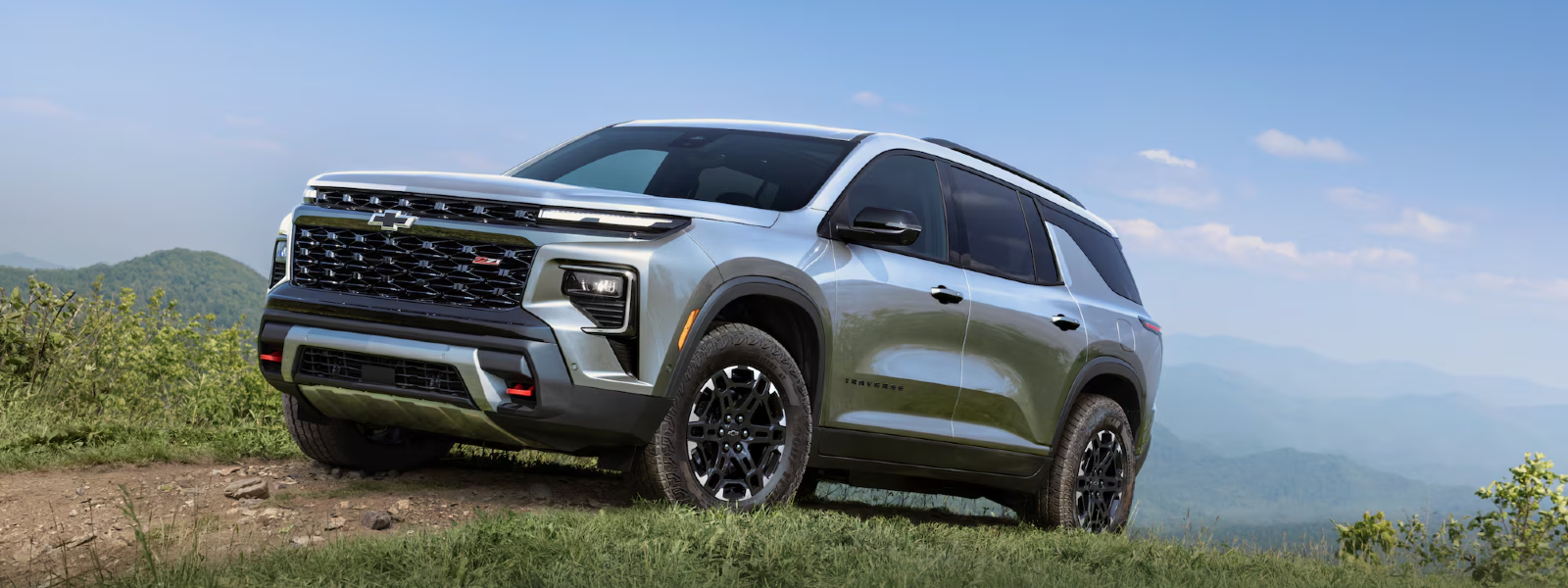
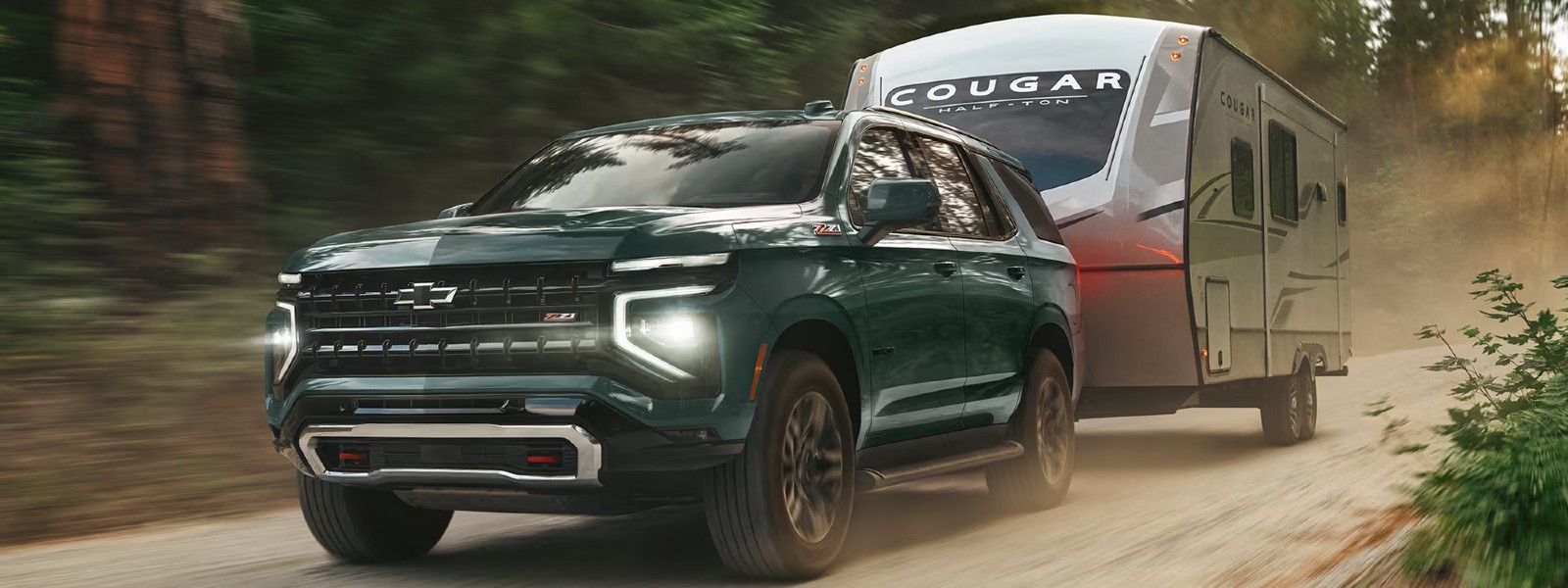
If you have been shopping for a family SUV recently, you may have narrowed your focus to two of Chevy's most popular three-row offerings. They both boast plenty of space, capability, and the brand's signature reliability, but they were designed for slightly different purposes. Here at Alford Motors Chevrolet, one question we hear all the time is, "How do I choose between the Chevy Traverse vs Tahoe?" Here's more information to help you make your decision.
Key Takeaways
- The Traverse's car-based platform means a smoother ride, easier parking, and a more affordable price tag.
- The Tahoe shares its truck-based platform with the Silverado, giving it more strength, size, and towing capacity.
- The Tahoe has a longer wheelbase and noticeably more third-row legroom and cargo space.
- The Traverse can seat up to eight passengers, depending on trim.
- If weekend towing is part of your routine, the Tahoe is built for it; if you mostly drive around town, the Traverse's smoother, more efficient ride may suit you better.
- Both SUVs offer a wide range of modern technology and safety features across their lineups.
At a glance — which one fits how you drive?
- Weekend towing — boats, campers, or trailers Tahoe
- Daily errands, school runs, and tight parking Traverse
- Lower price and better everyday fuel economy Traverse
- Maximum third-row legroom and cargo space Tahoe
Two Approaches to the Three-Row SUV
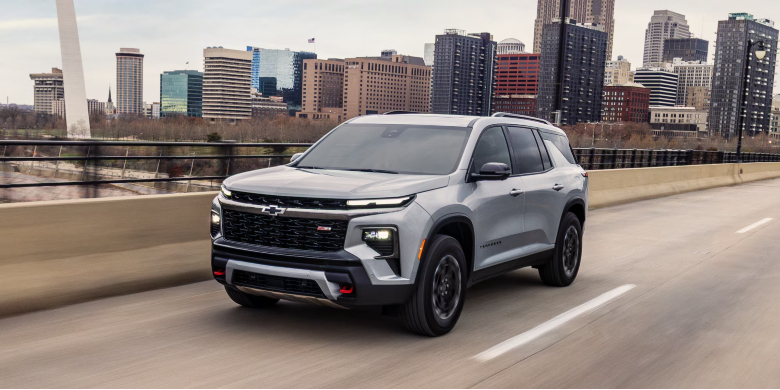
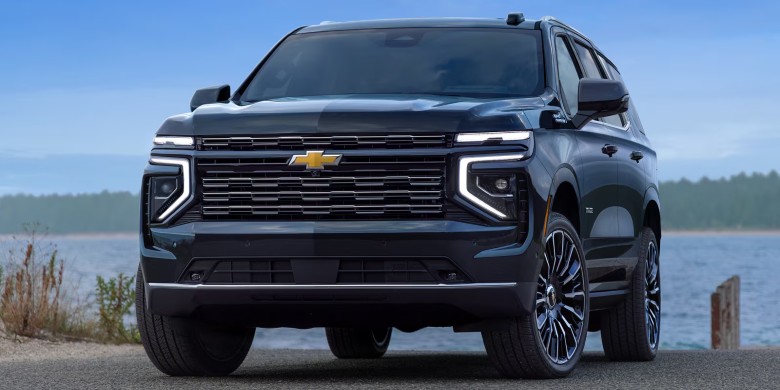
One distinct difference with the 2027 Chevy Traverse is that it is car-based. By being car-based, the Traverse offers a much smoother ride, a more efficient overall footprint with three rows of seats, and an overall more manageable size. The 2027 Chevy Tahoe is built on Chevy's truck-based platform, the same one that the Silverado uses. This makes the Tahoe stronger, larger, and capable of towing much more weight. So, while both make for fabulous three-row SUVs, the difference in their respective platforms can be felt in almost all aspects of how they drive.
Two different builds under the sheet metal
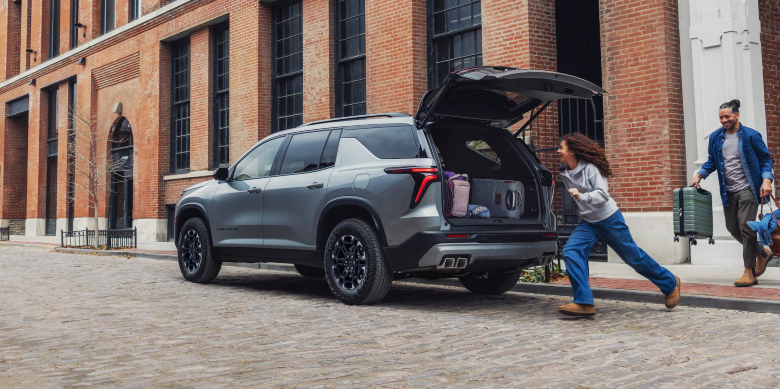
Traverse
Unibody, car-based constructionBody and frame are one welded structure — the same approach used by most car-based crossovers, built for a smoother, more efficient ride.
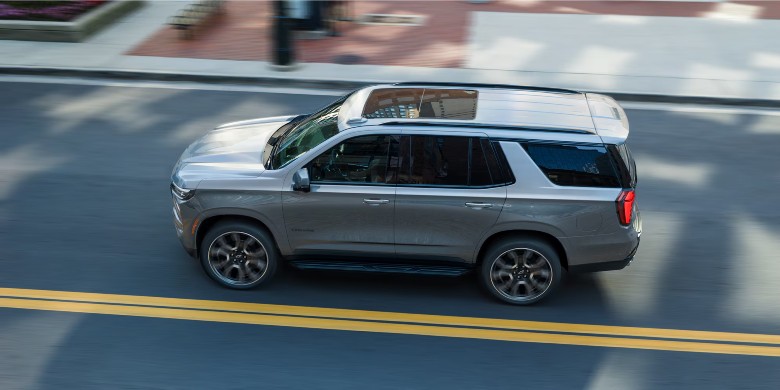
Tahoe
Body-on-frame, truck-based constructionBody sits on a separate steel frame — the same platform the Silverado uses — built for strength, size, and towing capacity.
Traverse vs Tahoe Size
The first thing many families notice in the Traverse vs. Tahoe comparison is that the Tahoe is bigger than the Traverse. In fact, the Tahoe features a longer wheelbase, a larger third-row seating area, and considerably more cargo space behind the third row than the Traverse. While the Traverse offers generous passenger seating—accommodating up to eight depending on the trim—it cannot match the Tahoe’s third-row legroom and cargo capacity. The extra legroom in the Tahoe is especially noticeable if adults or growing teens regularly sit in the back row.
Performance and Capability on the Road
One of the main reasons for the Tahoe's popularity is its full-size truck underpinnings and accompanying higher towing capacity, as well as its solid truck-based characteristics. This makes the Tahoe a favorite among families who tow boats, campers, or trailers. While the Traverse still offers good towing capacity for a car-based SUV, its reduced weight makes for a more car-like ride on the typical trip to work or school. The Tahoe is ideal for drivers who tow on weekends, whereas the Traverse is better suited for families focused on everyday, pavement-bound driving.
The Tahoe is ideal for drivers who tow on weekends, whereas the Traverse is better suited for families focused on everyday, pavement-bound driving.
Interior Comfort and Everyday Features
Both SUVs offer comfortable, well-appointed interiors, though the Tahoe holds an edge in second- and third-row space. However, the Traverse’s midsize footprint makes it easier to navigate tight parking spaces and city streets. They both come with a wide-ranging list of technology and safety features across their lineups, ensuring a modern driving experience in either vehicle.
Traverse vs Tahoe Price
Pricing is a major consideration for most buyers, and the Traverse typically comes out ahead in terms of affordability. Built on a smaller platform with less heavy-duty equipment, the Traverse delivers a lower price point and better fuel economy. While the Tahoe costs more, that price reflects its larger size, greater towing capability, and heavy-duty build. Ultimately, deciding between the two comes down to whether your budget aligns with the extra space and towing performance the Tahoe provides.
Which One Is Right for Your Family?
If the 2027 Chevy Tahoe is better for your family because of the extra interior space, towing capacity, and long-term reliability, that's great! If you prefer a three-row SUV that is more affordable, fuel-efficient, and easier to drive while still carrying the whole family, the 2027 Chevy Traverse is the ideal fit. Neither choice is wrong, and much of it comes down to how you intend to use your SUV on a day-to-day basis.
Neither choice is wrong, and much of it comes down to how you intend to use your SUV on a day-to-day basis.
Let Alford Motors Chevrolet Help You Decide
While comparing specs online is a good place to start, there is no replacement for getting behind the wheel and experiencing the difference firsthand. At Alford Motors Chevrolet, our team will happily answer any questions you have, walk you through the differences between the two SUVs, and schedule test drives to help you get a feel for the Traverse and the Tahoe. Stop by, and we can help you find the three-row SUV that is best for your family.
Frequently Asked Questions
Q. What's the main difference between the Chevy Traverse and the Tahoe?
The core difference comes down to platform. The Traverse is car-based, which gives it a smoother ride and a more manageable size, while the Tahoe is built on Chevy's truck-based platform — the same one used by the Silverado — making it stronger, larger, and capable of towing significantly more weight.
Q. Which is better for towing, the Traverse or the Tahoe?
The Tahoe is the better choice for towing. Its full-size truck underpinnings give it a higher towing capacity, which is why it's popular with families who tow boats, campers, or trailers. The Traverse still offers respectable towing capacity for a car-based SUV, but it's better suited to everyday driving without a trailer attached.
Q. Does the Tahoe really have more interior space than the Traverse?
Yes. The Tahoe has a longer wheelbase, a larger third-row seating area, and considerably more room behind the third row, along with noticeably more third-row legroom. The Traverse still seats up to eight depending on trim, but it can't match the Tahoe's cargo and legroom advantage.
Q. Is the Chevy Traverse cheaper than the Tahoe?
In most cases, yes. Because the Traverse is built on a smaller platform with less heavy-duty equipment, it typically carries a lower price tag and better fuel economy. The Tahoe costs more, but that extra cost goes toward a larger vehicle, greater towing capacity, and heavier-duty construction.
Q. Can I test drive the Traverse and Tahoe at Alford Motors Chevrolet?
Absolutely. Our team can walk you through the differences between the two SUVs in person and schedule test drives so you can feel the difference for yourself before deciding which three-row Chevy is the right fit for your family.